

Some rooms stop you in your tracks. They feel considered, warm, and full of quiet detail, but when you try to identify exactly what makes them work, it is hard to put your finger on it. That quality is almost always the result of layering: the practice of building a room from the ground up through carefully chosen, overlapping elements that each contribute something to the whole.
Layering is not about filling a room with things. It is about understanding how different elements interact with each other and making deliberate choices at every level of the space. Once you understand the principle, you will start to see it everywhere and start applying it naturally in your own home.
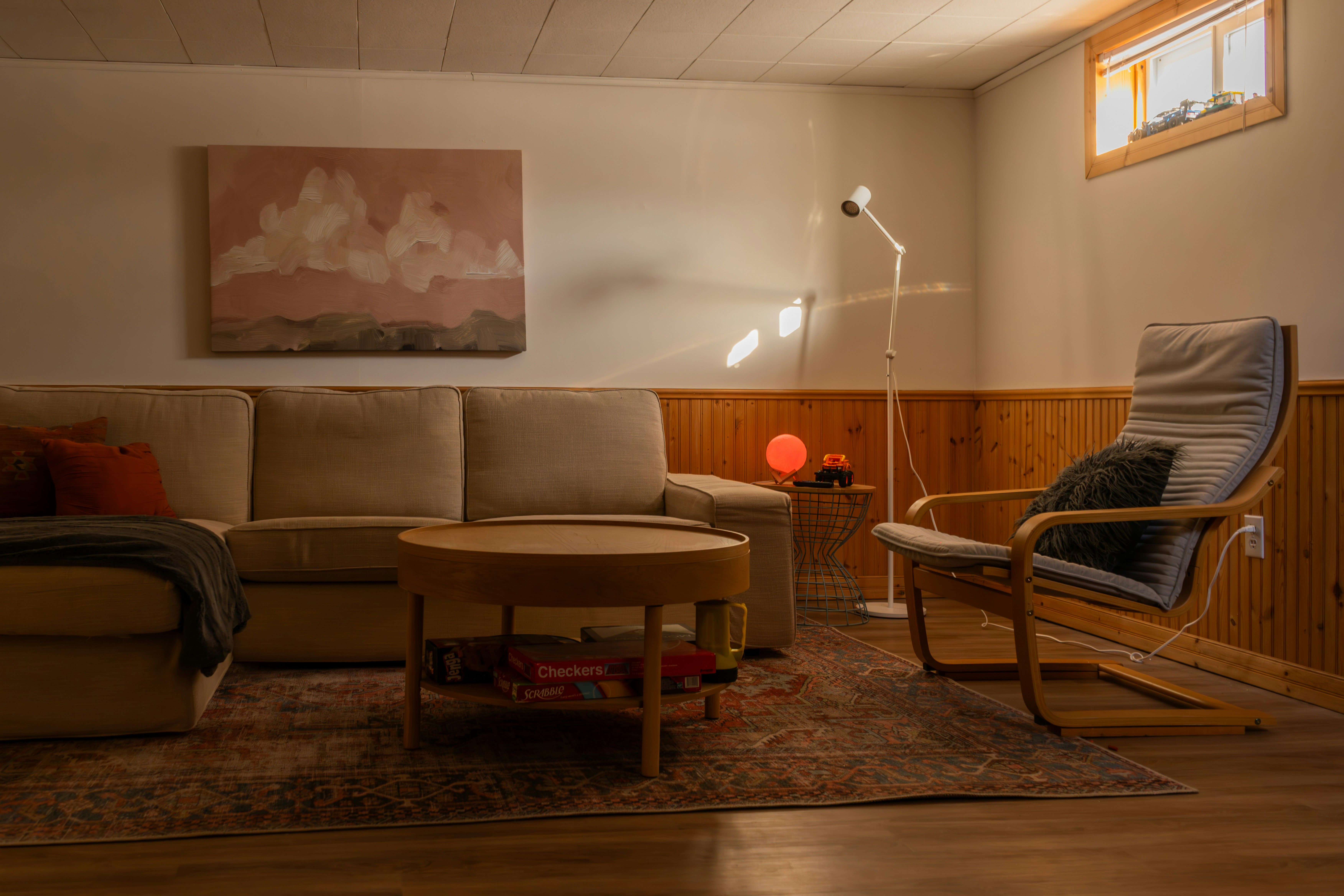
The easiest way to approach layering is to think of a room as being built from the ground up, with each physical component adding its own layer of character, texture, and function. Working through these in sequence helps you make decisions that are connected to each other rather than isolated.
Start with the foundation layers: flooring (timber, tiles, carpet, or stone), then walls (paint colour, wallpaper, or exposed brick). These set the tone for everything else and are the hardest to change, so they deserve the most careful thought. From there, add furniture as the next layer, then textiles such as rugs, cushions, throws, and curtains. Lighting comes next, followed by wall hangings including artwork and mirrors, and finally the decorative elements: plants, ceramics, sculptures, and the personal pieces that make a space feel genuinely lived in.
Working through a room in this order stops you from making decisions in isolation. Each layer informs the next, and the result is a space where everything belongs.

The most engaging rooms are not harmonious in the sense of everything matching. They use contrast deliberately to make individual elements more interesting and to create the sense of visual tension that keeps a room from feeling flat.
There are five main ways to introduce contrast effectively:
Contrast in pattern means pairing an intricate or detailed design with something plain. A heavily patterned cushion reads far better against a simple linen sofa than it does against another busy fabric. Give bold patterns room to breathe.
Contrast in colour draws on the principle of complementary relationships. Tones that sit opposite each other on the colour wheel, warm against cool, deep against light, create energy and interest without clashing. Dulux has useful colour pairing tools on their website if you are working through a palette and want a reference point.
Contrast in materials means pairing the man-made with the natural. Timber alongside glass, stone alongside linen, leather alongside a chunky wool throw. The difference in origin and character between materials creates depth that a room furnished entirely in one material type never achieves.
Contrast in texture works along similar lines. Smooth against rough, soft against hard, matt against sheen. A polished concrete floor with a deep pile rug. A velvet cushion on a linen sofa. A ceramic vase on a raw timber shelf. Each pairing makes both elements more interesting by comparison.
Contrast in proportion means mixing scale deliberately. Large pieces alongside small ones, tall elements alongside low ones. This keeps the eye moving around a room and prevents everything from reading at the same visual weight, which quickly becomes monotonous.

Contrast alone does not make a room work. Without some recurring threads running through the space, contrast tips into chaos and the room loses coherence. The art of layering is in finding the right balance between the two.
Unity comes from repetition: a colour that recurs across different elements, a material that appears in more than one place, a consistent finish on hardware and fittings. Warm timber tones that appear in the flooring, a side table, and a framed mirror. A shade of deep blue that turns up in a cushion, a piece of artwork, and a ceramic on the shelf. These threads connect the room without making it feel uniform.
The practical test for unity is whether your room has a sense of intention when you step back and look at it as a whole. If individual elements feel unrelated to each other, the room needs more connective tissue. If everything feels too matched and expected, it needs more contrast. Most rooms benefit from tilting slightly toward contrast, since most people's instinct is to play it too safe.

The idea of layering an entire home from scratch can feel overwhelming, and it is worth resisting the urge to approach it that way. Start with one room and work through each layer in sequence before moving to the next space. This gives you a contained project to develop your instincts on and a finished result you can learn from.
Within that room, start with what you cannot change easily (floors and walls), then make furniture decisions, then textiles, then lighting, then art and accessories. Each decision should respond to the ones before it. By the time you reach the accessories layer, the room is already doing most of the work and you are simply completing the picture.
The most well-layered rooms feel effortless, but that ease is the product of considered decisions made at every stage. Take your time with each layer and the result will be a space that genuinely reflects you and rewards the attention you bring to it.
If you would like help working through the layering process in your own home, get in touch. It is one of the most satisfying things to work through with a client from the ground up.


