

The mid-century modern style guide published separately on this site covers the foundational principles of the aesthetic: warm timber, organic forms, graphic colour pops, and the seamless connection between indoors and outdoors. This article goes further, exploring how mid-century design works in specific residential contexts, coastal homes, garden-focused properties, and interiors that layer mid-century with other cultural and decorative traditions. The result is a style that feels genuinely lived in rather than curated for display.
The front door of a mid-century home is one of the most underused design opportunities available. Mid-century architecture typically favours a restrained exterior palette, whites, warm greys, and natural timber, which makes a coloured front door an immediate and striking contrast that signals personality and sets the tone for what is inside.
A deep blue door against a white rendered exterior. A warm terracotta against a natural timber facade. A sage green against dark grey weatherboard. Each of these combinations creates an immediate impression that is bolder and more personal than a conventional white or natural timber door, and each can be echoed internally in small ways that create a colour thread running from the exterior into the home.
The colour need not be loud to be effective. Even a deeply saturated version of a neutral tone, a rich navy rather than a bright blue, a deep forest green rather than a lime, creates the contrast needed to make the door a genuine design moment. Dulux has a comprehensive range of door colours suited to mid-century exteriors, with a colour consultation tool that helps identify tones that work with a specific exterior palette.
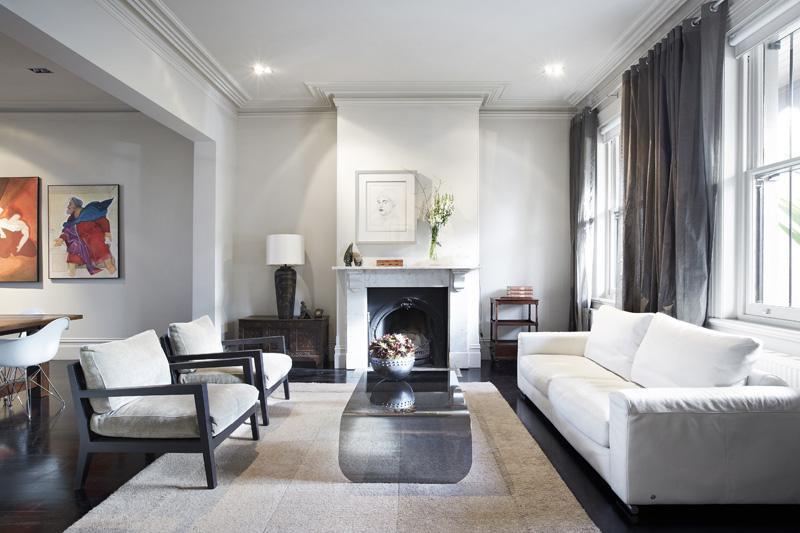
The fireplace is one of the most characteristic features of a mid-century living room, and when it is executed well it becomes the room's clear focal point and social centre. A painted brick fireplace, whether in white, a warm off-white, or a colour that responds to the room's palette, has a quality of solidity and warmth that more refined stone or render finishes do not always achieve.
The painting of the brick is important because raw brick in a primarily white or neutral interior can read as unresolved rather than rustic. Painting it white or in a tone consistent with the surrounding walls creates a cohesive feature that reads as designed rather than unfinished. The texture of the brick remains visible through the paint, which provides the tactile interest of the material without the visual weight of exposed brick in a light-filled space.
Position the main seating arrangement to face the fireplace rather than the television, which in a mid-century home is almost always the right spatial decision. The fireplace as the primary focal point creates a room designed for conversation and rest rather than for passive entertainment.
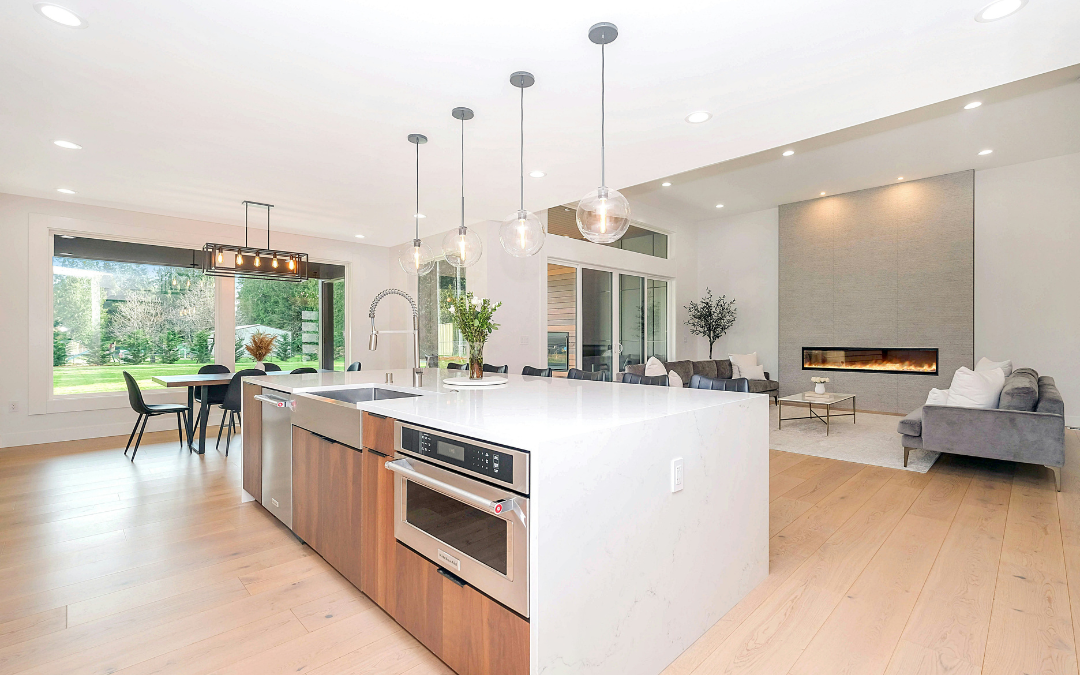
One of the most appealing features available in a mid-century or renovated home is a skylit breakfast area, whether as an extension of the kitchen or as a glazed bay that catches the morning light. This kind of space has a quality of natural brightness that changes through the day in a way that artificially lit rooms cannot replicate, and it makes even the most functional meal feel like an occasion.
The furniture in a skylit breakfast area should respond to the quality of light rather than competing with it. A round table in a warm timber, paired with simple chairs in a complementary tone, allows the space and the light to be the dominant experience. A statement pendant hung at an intimate height above the table adds warmth in the evenings and creates a visual anchor within the open, glazed volume.
Mid-century pendant lighting in particular suits this kind of space. Clean, sculptural forms in warm metals or matte materials that contribute to the atmosphere without dominating it. The pendant should feel like it belongs to the architecture of the space rather than having been imported from somewhere else.
One of the most satisfying qualities of a well-designed mid-century home is the sense that the interior and exterior are in genuine conversation with each other. A colour used on the front door that reappears on a bathroom vanity. The stain colour of the exterior timber cladding that echoes the floor finish inside. The blue of the pool water reflected in the tones of the interior soft furnishings.
These colour echoes are rarely accidental. They are the result of someone making deliberate decisions about the relationship between the inside and the outside of the building rather than treating them as separate design exercises. The result is a home that feels like a unified object rather than an interior within an envelope.
When planning any significant renovation or fit-out of a mid-century home, identify two or three colours or material tones that will play this connective role and track them deliberately from the exterior through to the interior details. The connections do not need to be exact matches. Tonal family relationships, where the interior colour is a lighter or deeper version of the exterior tone, work just as well and feel less contrived.
The mid-century homes that feel most genuinely of their era are the ones where original details have been preserved and celebrated rather than replaced with contemporary equivalents. Timber-panelled robes with their characteristic louvre doors. Original terrazzo or mosaic tilework in bathrooms. Built-in cabinetry with the clean, rectilinear profiles of the period. These details are the authentic material record of the era and give a mid-century home a quality of character that renovation cannot replicate.
The discipline when renovating a mid-century property is to audit carefully what is original before beginning any demolition. What appears dated or tired in isolation often reads as genuinely characterful in the context of a well-considered renovation. A coat of paint, new hardware, and updated fixtures can modernise original cabinetry and joinery without the loss of authenticity that replacement entails.
Where original details are beyond salvage, look for contemporary equivalents that share the same design language. Louvred cabinet doors rather than panel doors. Terrazzo tiles rather than plain stone. Timber veneer rather than painted MDF. These choices keep the renovation in conversation with the period of the building rather than erasing it.
One of the most interesting and underexplored possibilities in mid-century design is the combination of the style's clean structural forms with the richness of decorative traditions from other cultures. Mid-century furniture's clear lines and natural materials provide an excellent foundation for layering in antique Japanese screens, hand-painted wallpaper, oriental rugs, vintage rosewood furniture, or artisan pieces from non-Western craft traditions.
The contrast between the structural clarity of mid-century design and the decorative richness of these other traditions creates a visual layering that makes the interior feel collected and personally meaningful rather than period-correct and static. The mid-century pieces provide the room with its spatial logic. The antique and decorative pieces give it depth, warmth, and the quality of having been accumulated over time.
The discipline in this kind of layering is ensuring a consistent thread that connects the disparate elements. A material family, natural timber, bronze, and stone that appears in both the mid-century furniture and the antique pieces. A colour palette that runs through both the structural and the decorative layers. A consistent level of quality and craft that makes pieces from different traditions and different centuries feel as though they belong in the same room.
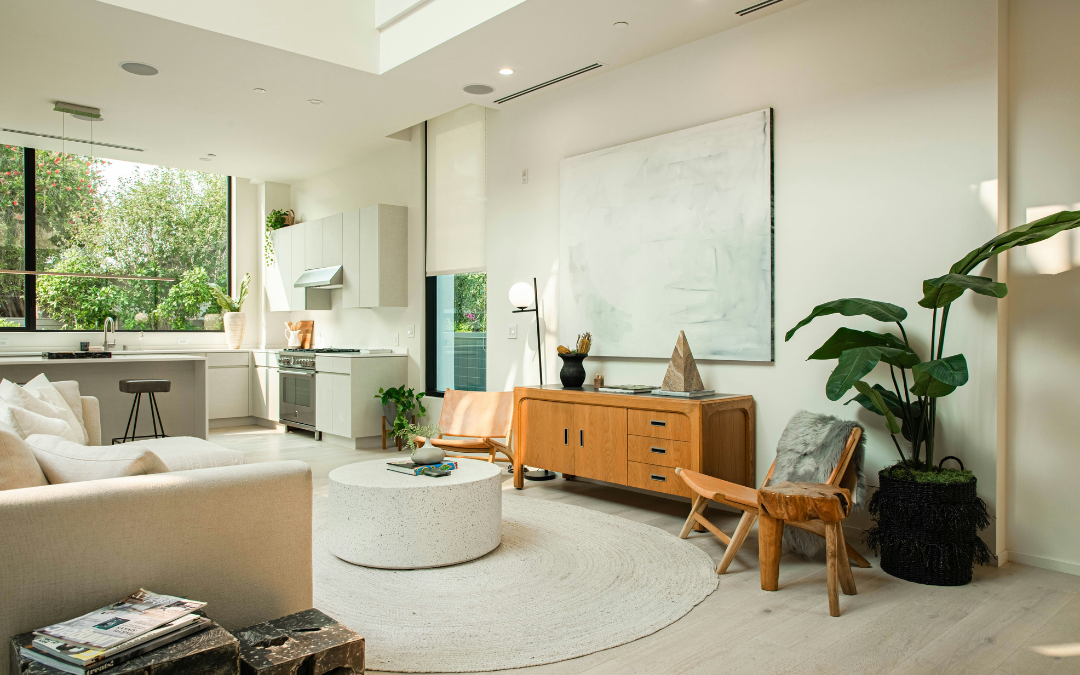
In a mid-century home where the interior draws on a specific cultural tradition, whether Japanese, Scandinavian, Australian, or another reference, the garden is an opportunity to extend that reference outward in a way that creates a sense of completeness around the whole property.
Asian-inspired garden design, with its emphasis on considered planting, sculptural form, water features, and the balance of hard and soft landscape elements, suits the clean structural character of mid-century architecture particularly well. The relationship between the interior's decorative eastern references and an Asian-influenced garden creates a spatial and cultural coherence that makes the property feel like a single designed world rather than a house with a garden attached.
In an Australian coastal context, native planting that responds to the specific landscape of the site, its soil, its aspect, and its relationship to the ocean, creates a garden that belongs to the place in the way that imported ornamental planting does not. Native plants also require less water and maintenance, which suits the relaxed ethos of a mid-century beach house where the garden should feel effortless rather than demanding.
A freestanding bath in a master bathroom that overlooks a private courtyard or garden is one of the most purely pleasurable features available in a residential renovation. It combines the functional luxury of a quality bathing experience with the visual pleasure of a connection to the natural world, and it creates a moment of complete privacy within the home that is genuinely restorative.
The placement of the freestanding bath is the most important decision. A bath positioned to face a window or glazed wall with a private garden view creates the experience of bathing in the landscape without sacrificing privacy. A bath on a raised platform that elevates the sightline slightly can maximise a view that would otherwise be obscured by a garden wall or fence line.
The material of the bath should suit the overall material palette of the bathroom and the home. In a mid-century home with natural stone and timber, a stone resin bath in a warm white or a matte grey sits more naturally than a highly polished acrylic finish. In a more decorative interior with marble and antique furniture, a Calacatta marble or high-gloss white bath in a classical form creates the right sense of occasion.
The mid-century homes that people find most compelling are not the ones that have been restored to period perfection and then preserved behind glass. They are the ones where someone has understood the principles of the style, its warmth, its materiality, its connection to the natural world, and then applied those principles to a home that is genuinely inhabited by specific people with specific tastes and specific histories.
The coloured front door, the authentic period detail, the layered cultural reference, the private bathing moment, and the garden that belongs to the landscape are all expressions of a home designed for living rather than for display.
If you would like help bringing mid-century principles into your own home, whether in a period property or a contemporary space that draws on the style, get in touch. It is a style we work with regularly and genuinely love.


