

Clutter is one of the most common complaints in Australian homes, and it is rarely a space problem. It is almost always a storage problem. When belongings do not have a proper home, they accumulate on surfaces, in corners, and in rooms that were never designed to hold them. The result is a home that feels smaller, harder to clean, and more stressful to spend time in than it needs to be.
The good news is that smart storage does not have to look utilitarian. The best storage solutions are designed to be seen as well as used. Here is how to approach storage room by room in a way that is both functional and genuinely considered.
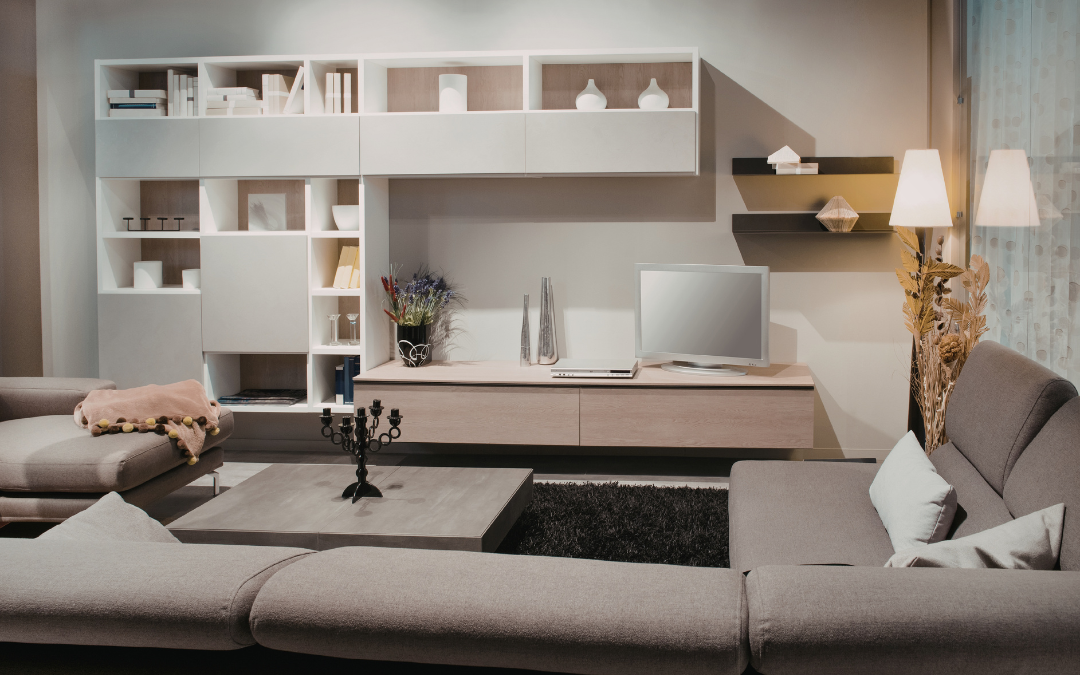
Before investing in a single storage solution, do the work of removing what does not need to be stored at all. The most common mistake is buying more storage to accommodate belongings that should have been donated, sold, or discarded years ago. Walk through each room and ask honestly whether each item is used, loved, or necessary. Everything else is a candidate for removal.
This first step costs nothing and immediately makes every room feel more spacious and manageable. It also gives you a much clearer picture of what actually needs to be stored and in what quantities, which makes every subsequent storage decision more accurate.
The most underused storage resource in most homes is the space between the top of the furniture and the ceiling. Floor-to-ceiling shelving transforms a wall from a blank surface into a highly functional storage and display system without taking up any additional floor area.
Built-in floor-to-ceiling box shelving is one of the most effective solutions available. It creates a striking visual feature as well as practical storage, and the individual cubby holes can be styled to reflect your taste. A mix of closed storage for everyday items and open shelving for books, plants, and decorative objects keeps the wall feeling considered rather than cluttered. Lining the back of a few cubbies with patterned wallpaper in a consistent colour palette adds visual depth and personality without overwhelming the wall. Choosing two or three complementary patterns in the same tones creates a coordinated look that feels intentional.
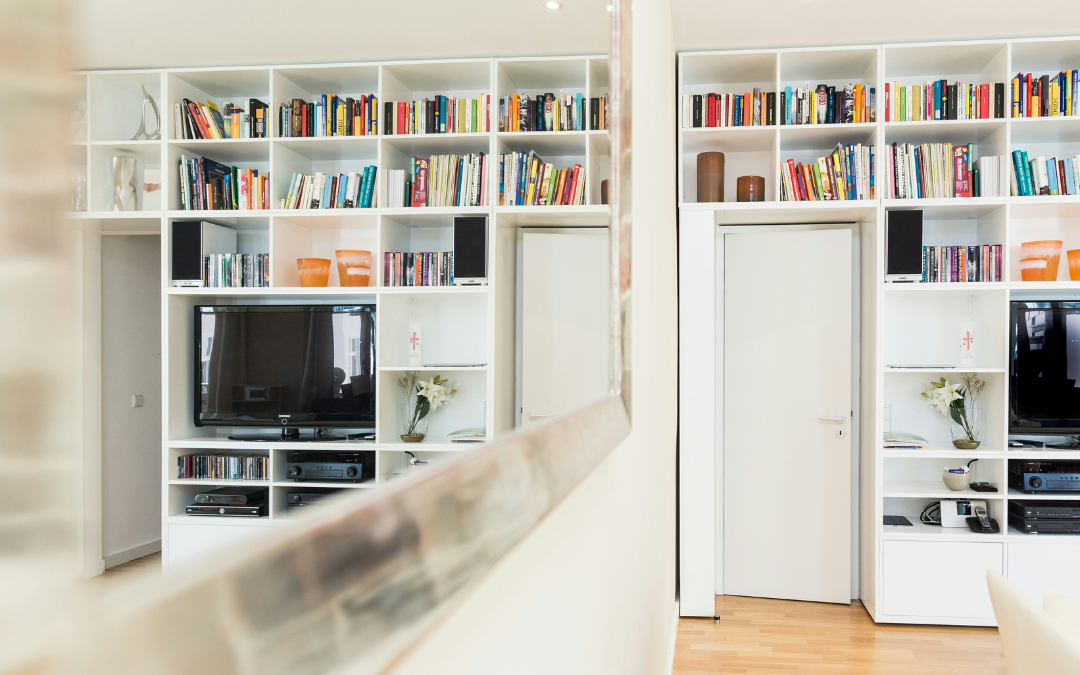
Tall bookshelves are one of the most versatile storage investments you can make. They work in living rooms, studies, hallways, and bedrooms, and they store far more than books. Hooks mounted beside or beneath a bookshelf handle jackets, bags, and scarves without requiring any additional furniture.
For a more unexpected storage solution in a bedroom, a simple timber ladder leaned against the wall beside the bed provides a place for jewellery, books, a reading lamp, and a throw. It takes up almost no floor space and adds a relaxed, organic element to the room. GlobeWest carries a range of shelving and storage pieces in natural timber and metal finishes suited to residential interiors across all room types.
Custom built-in storage is the most space-efficient solution available because it is designed to fit the exact dimensions of your room rather than approximating them. Built-ins sit flush with walls, eliminate the visual weight of freestanding furniture, and give any room a more cohesive and finished appearance.
The rooms where built-in storage delivers the greatest return are wardrobes, home offices, laundries, and living room entertainment units. In each of these spaces, the difference between a well-designed built-in and a collection of freestanding furniture is immediately visible. Built-ins also add value to a property in a way that moveable furniture does not. If you are renovating, allocating budget to custom storage in the rooms where you feel it most is almost always a worthwhile investment.
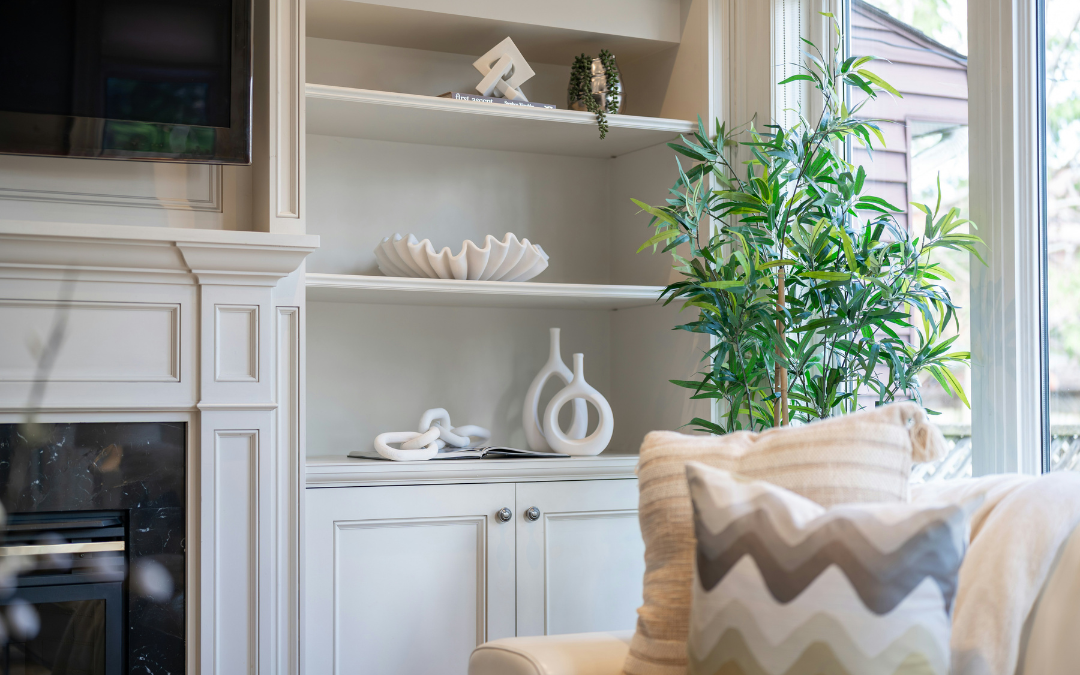
In smaller homes and apartments, every piece of furniture should justify its floor space by serving more than one purpose. Sofas and ottomans with internal storage handle blankets, cushion covers, and seasonal items without requiring a separate storage unit. Coffee tables with built-in drawers or shelves keep remotes, magazines, and everyday objects out of sight without banishing them entirely. Beds with storage drawers underneath make use of the space that would otherwise be wasted.
The principle applies equally to less obvious pieces. A bench at the end of a bed that opens for storage. A window seat with a hinged lid. A console table in the hallway with baskets underneath for shoes and bags. Each of these pieces solves a storage problem while contributing to the room's design rather than interrupting it. Bunnings carries a practical range of modular and dual-purpose storage solutions for smaller spaces.
In rooms where function and aesthetics need to coexist closely, the most effective approach is a deliberate mix of open and closed storage. Drawers and cupboards handle the practical items you want hidden: cleaning products, medications, spare toiletries, and everyday kitchen supplies. Open shelving handles the items worth displaying: quality towels folded neatly, a plant, a candle, a set of matching ceramic canisters, or a collection of glassware.
The discipline this approach requires is that anything on open shelving needs to be genuinely worth looking at. Woven baskets are a practical bridge between the two: they contain clutter without exposing it, and they add texture and warmth to a shelf that a closed cabinet cannot provide.
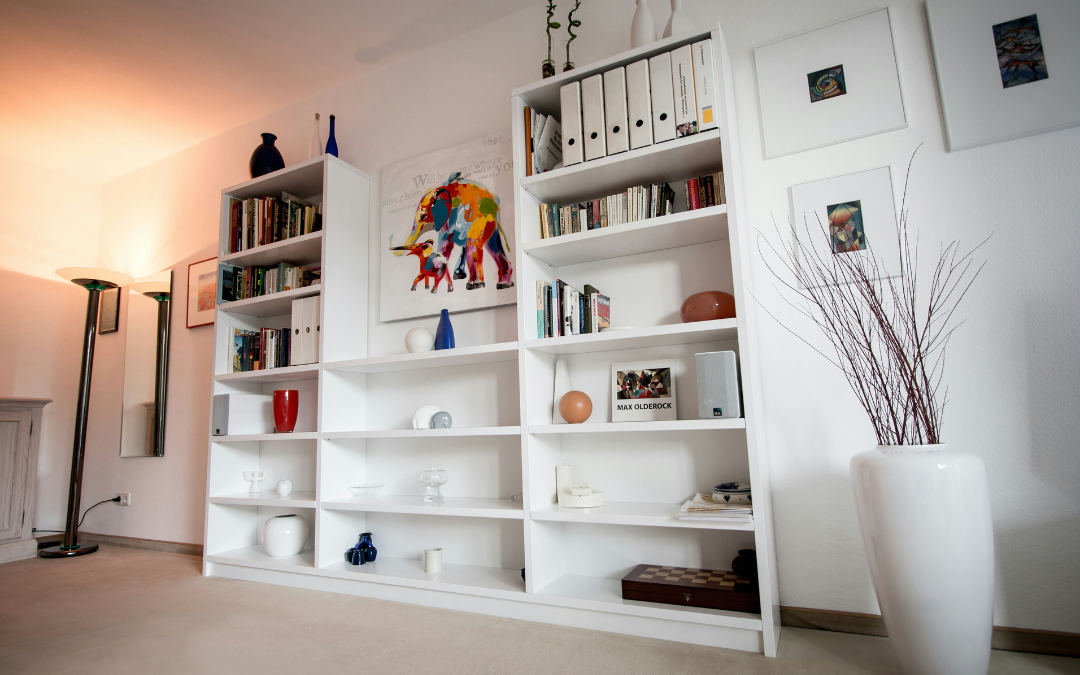
Children's storage needs to be accessible to the children themselves, otherwise it will not be used. Low shelving, open bins, and labelled baskets at a child's eye level encourage tidying because the system is easy enough to actually follow. Toy boxes and trunks handle the overflow. Over-door organisers and hanging baskets make use of space that would otherwise go unused.
Under-bed storage is particularly valuable in children's rooms, where floor space is often at a premium. Flat storage drawers on castors handle seasonal clothing, extra bedding, and the toys and games that are used occasionally rather than daily. As children grow, the same storage infrastructure adapts to different contents, which makes it a long-term investment rather than a short-term fix.
The most important quality of any storage system is that it suits the way you actually live rather than the way you imagine you might live. Storage that requires effort to use will be ignored. Storage that is intuitive, accessible, and integrated into the design of the room will become a natural part of how the household functions.
If you are not sure where your storage problems are greatest or how to address them within your existing space, get in touch. Storage planning is one of the practical fundamentals we look at in every project, and getting it right from the start makes everything else easier.


