

The most successful commercial interiors of 2026 have something in common that goes beyond good-looking photography. They are spaces people want to spend time in, return to, and tell others about. The design decisions behind that quality are not accidental. They follow a set of principles that residential designers and hospitality designers alike are increasingly drawing from the same well.
Understanding what makes a commercial interior genuinely compelling is useful whether you are fitting out a retail space, a café, or a hospitality venue, or simply interested in what the most considered commercial spaces can teach us about designing better residential interiors.
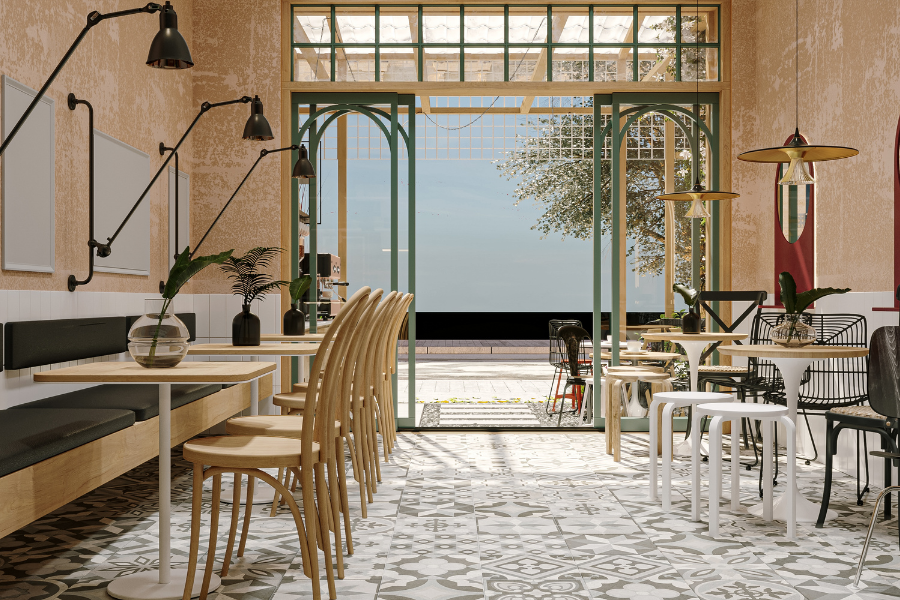
The strongest shift in commercial interior design right now is the move from aesthetics-first to experience-first thinking. The question driving the best designers is not "how will this look in a photograph" but "how will this feel to be in." The photograph is a byproduct of getting the experience right, not the goal in itself.
This means designing for the full range of senses. Lighting that shifts from bright and energising during the day to warm and atmospheric in the evening. Acoustic materials that absorb sound rather than bouncing it back. Scent, texture, and spatial flow all considered alongside the purely visual. A space that engages multiple senses simultaneously creates a depth of experience that no amount of photogenic styling can replicate.
The practical implication for anyone designing or commissioning a commercial interior is to start every decision with the question: how does this make someone feel when they are standing in the space, not how does it look from a distance?
One of the most visible trends in commercial interior design in 2026 is the use of bold, cohesive colour palettes that define an entire space rather than appearing as accent details.
Instead of a neutral backdrop with colour highlights, the most memorable commercial interiors are building full tonal environments. Soft pastels used consistently across walls, furniture, and tableware create a playful, immersive quality that reads as a coherent design decision rather than a decorating choice. Deep jewel tones in a hospitality setting, a rich burgundy, a forest green, or an inky navy used across every surface, create an intimate and luxurious atmosphere that customers respond to viscerally.
The key to making full-colour environments work is consistency of undertone. Every colour in the space needs to sit in the same warm or cool register. Mixing warm and cool tones across a bold palette is where cohesive quickly becomes chaotic. Dulux offers commercial colour consultation services for exactly this reason, which is worth engaging for any commercial project where colour is doing significant design work.
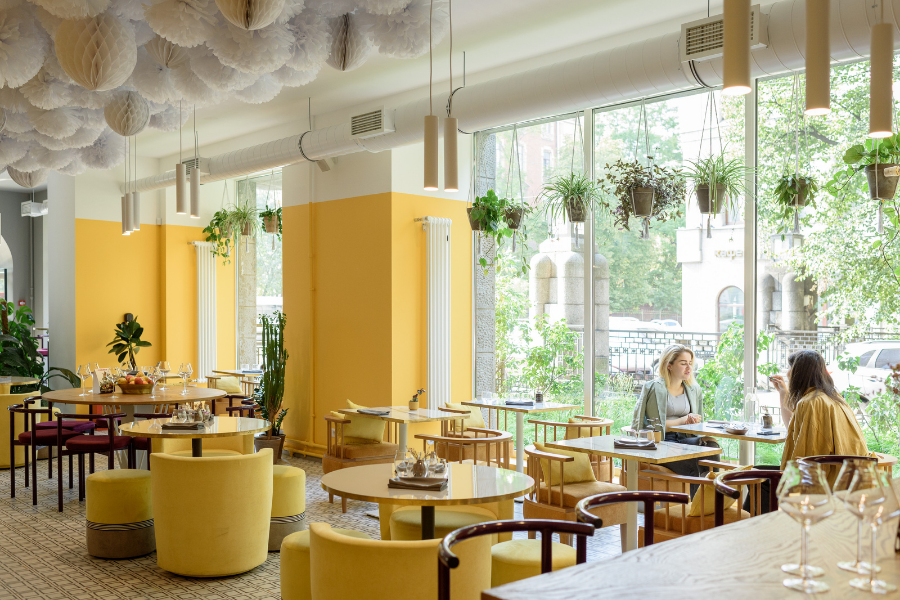
Furniture and fixtures in the best commercial interiors of 2026 are increasingly treated as sculptural objects rather than functional equipment. Curved counters, oversized decorative pendants, seating with interesting silhouettes, and bespoke joinery with architectural detail all blur the line between furniture and installation art.
These sculptural elements serve a specific design function beyond their appearance. They create natural pauses in a space, points where a visitor's eye stops moving and rests on something worth looking at. In a café or retail environment this translates directly into dwell time, which correlates with both sales performance and the likelihood of a space being shared and recommended.
The lesson for commercial interior design is that investing in one or two genuinely considered sculptural elements, a statement pendant, a custom counter, a curved banquette, delivers a return that generic furniture in the same footprint never can.
Texture is the design element that makes a commercial interior look and feel completely different across different lighting conditions and from different angles. A space built on a single surface finish can look beautiful in a carefully controlled photograph and flat in person. A space with layered texture, polished marble alongside rough plaster, brushed metal alongside warm timber, fluted surfaces alongside smooth ones, looks interesting from every angle and in every light.
This layering of material contrast is one of the most consistent qualities of the commercial interiors that generate genuine word-of-mouth rather than just social media engagement. Beaumont Tiles is a practical starting point for exploring how different surface materials can be combined in a commercial context, particularly for hospitality and retail projects where floors, walls, and countertops need to work together across a varied spatial experience.
A significant thread running through commercial interior design in 2026 is the intelligent use of nostalgia. Vintage-inspired signage, playful typography, soft pastel palettes that reference mid-century cafés and dessert bars, and references to classic hospitality aesthetics are all appearing with increasing frequency.
The version of this that works draws a clear distinction between nostalgic reference and themed pastiche. The former uses historical visual cues selectively and balances them with contemporary materials, clean architectural lines, and modern spatial thinking. The latter reproduces a historical aesthetic wholesale and produces a space that feels like a costume rather than a considered design.
The retro furniture restoration article published separately on this site explores how this same principle applies in residential contexts, where vintage pieces reupholstered in contemporary fabrics can achieve the same balance of historical character and modern relevance.
The design principles behind the most compelling commercial interiors in 2026 are not unique to commercial spaces. Experience-led thinking, full-commitment colour, sculptural focal points, layered texture, and the intelligent use of historical reference are all equally applicable to residential design.
The commercial context simply makes the principles more visible because the stakes of getting it wrong are measured in foot traffic and revenue rather than personal satisfaction. A café that gets the lighting wrong loses customers. A home that gets the lighting wrong loses something harder to quantify but no less real.
If you are thinking about how these principles might translate into your own home or commercial space, get in touch. We work across both residential and commercial projects and find that the two inform each other in genuinely useful ways.


