

Modern industrial style has moved well beyond its warehouse origins. What began as an aesthetic born from converted factories and loft apartments in cities like New York and Melbourne has become one of the most adaptable and characterful interior design styles available. It works in family homes, apartments, and commercial spaces alike, and when it is done well it produces interiors that feel both effortlessly cool and genuinely warm.
The key to getting industrial style right in a residential setting is understanding what makes the aesthetic work and where to apply restraint. Raw materials and functional objects are the foundation, but a home needs warmth and comfort in a way that a warehouse does not. Here is how to find that balance.
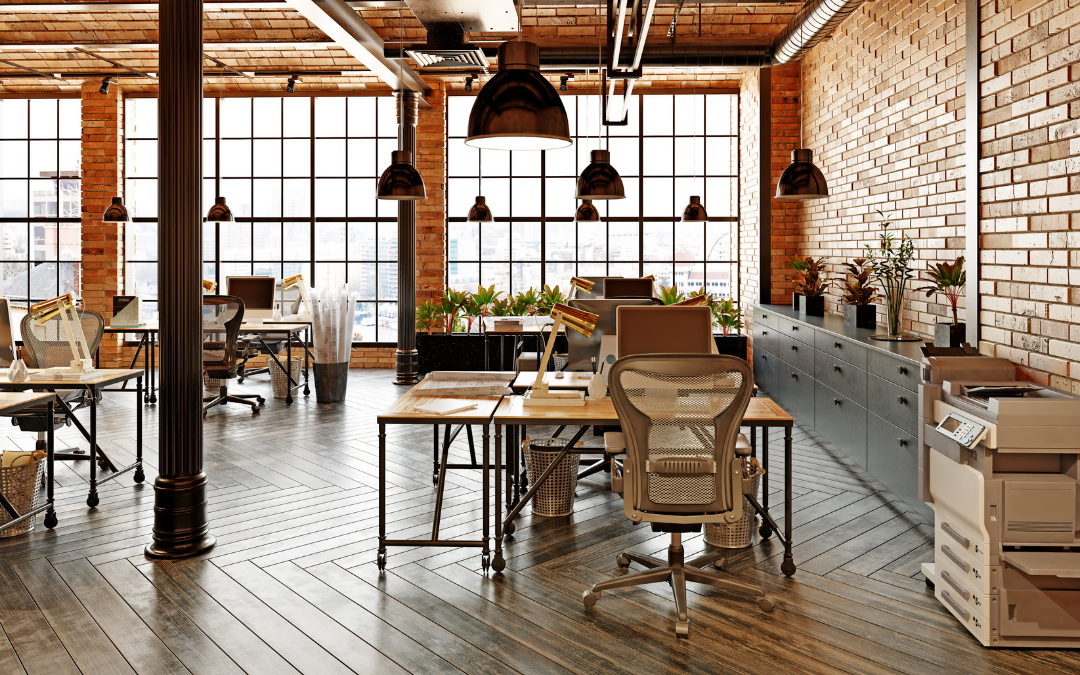
The industrial colour palette is drawn directly from the materials of industry: concrete, steel, brick, and raw timber. Grey in all its variations, from pale silver to deep charcoal, is the dominant tone. Black adds drama and definition. Warm neutrals, sandy beiges, raw linens, and natural timbers, prevent the palette from feeling cold and industrial in the wrong sense.
Avoid busy patterns in textiles and soft furnishings. The visual interest in an industrial interior comes from material contrast and texture rather than pattern. Plain block colours in throws, cushions, and rugs keep the look clean and allow the harder elements of the room to do the talking. Dulux has a strong range of concrete and warm grey tones that work well as a base for an industrial interior, particularly in their deeper charcoal and warm mid-grey shades.
The defining characteristic of industrial design is the celebration of materials that are usually hidden or finished over. Exposed brick walls, raw concrete floors or ceilings, visible steel beams, and unfinished timber surfaces all contribute to the honest, unpretentious quality of the style.
If your home does not have these features architecturally, they can be introduced through furniture and finishes. A concrete-look tile, a raw timber dining table with visible grain and knots, or a steel-framed shelving unit all bring industrial character into a space without structural renovation. The material itself is the decoration in an industrial interior, which means the quality and authenticity of what you choose matters more than in styles where surface finishes and paint do the work.
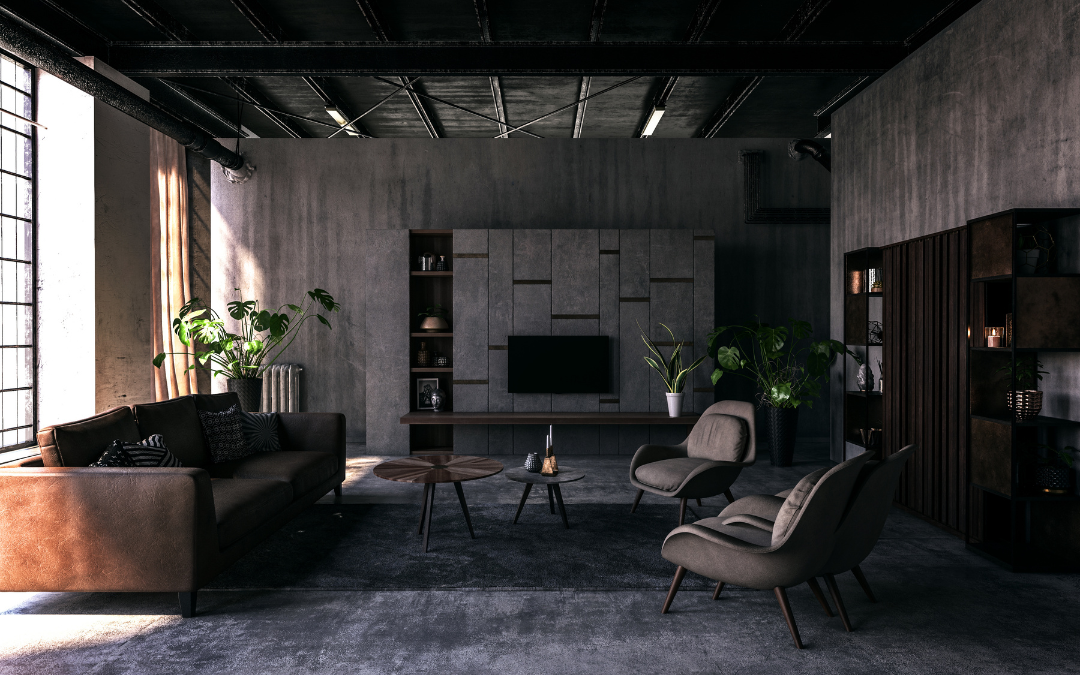
Metal is the element most closely associated with industrial design, and the style actively encourages mixing different metals and finishes rather than keeping everything consistent. Matte black alongside brushed steel, aged brass alongside raw iron, and tarnished patina alongside bright chrome all create the layered, collected quality that makes industrial interiors feel genuinely interesting rather than showroom-fresh.
The principle is to combine matte with sheen and old with new. A matte black pendant light alongside a brushed steel tap. An aged iron shelf bracket alongside a polished concrete benchtop. These pairings create the tension and contrast that gives industrial design its character. Beacon Lighting carries a strong range of industrial-style pendants and floor lamps in matte black and aged metal finishes suited to residential interiors.
Industrial furniture originated in professional contexts, workshop benches, factory shelving, laboratory tables, and storage systems designed for function rather than aesthetics. When these pieces are brought into a home, they carry a quality of authenticity and history that purpose-built decorative furniture rarely matches.
Look for pieces with visible construction, exposed bolts, welded joints, and metal frames. Raw timber tabletops with natural edges and visible grain. Factory-style shelving in steel with adjustable heights. Bar stools in raw metal with simple leather or timber seats. Each piece should feel as though it was built to last and built for a reason.
Mixing raw wood with metal is the combination that works best in a residential industrial interior. A timber dining table on a steel frame, a reclaimed wood shelf on iron brackets, or a leather sofa alongside a raw steel coffee table all create the warm-meets-raw contrast that stops the style from feeling cold. GlobeWest carries a range of industrial-influenced furniture in timber and metal combinations suited to Australian homes.
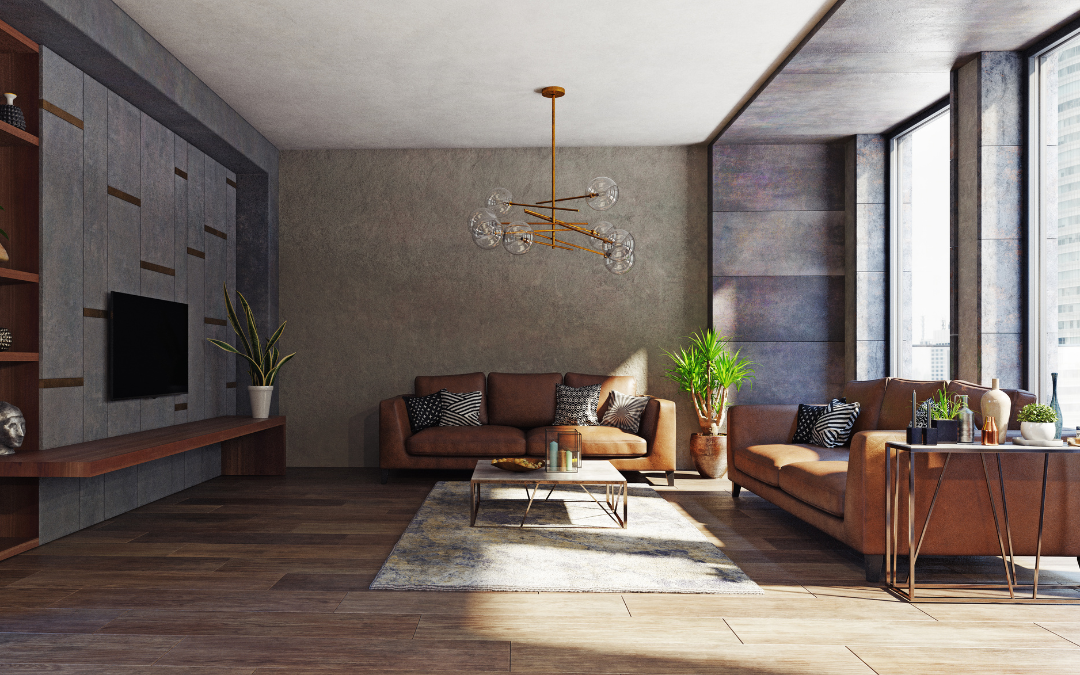
The most common criticism of industrial interiors is that they feel cold and unwelcoming. This is almost always a lighting and textile problem rather than a fundamental flaw in the style itself.
Layered lighting is essential in an industrial interior. A statement pendant in aged metal or matte black above the dining table, supplemented by warm-toned Edison bulbs, wall-mounted industrial sconces, and a floor lamp in the living area, creates the kind of warm, atmospheric lighting that makes a raw-material interior feel genuinely inviting. The bulb choice matters: warm-toned filament bulbs suit the industrial aesthetic perfectly and cast a golden glow that softens hard surfaces.
Textiles do the same work in a different register. A generous wool rug on a concrete or timber floor, a leather sofa dressed with linen cushions and a knitted throw, and curtains in a heavy natural fabric all add the physical warmth and softness that prevent an industrial interior from feeling like a place where you work rather than a place where you live.
The industrial style works best when it is not taken to its logical extreme. A home that is entirely raw concrete, exposed steel, and bare brick becomes uncomfortable to live in and difficult to keep warm both physically and visually. The most successful industrial interiors balance the raw with the refined.
A vintage leather armchair alongside exposed brick. A white marble benchtop in an otherwise industrial kitchen. A carefully chosen piece of artwork on a raw concrete wall. A cluster of indoor plants against a steel shelving unit. These moments of softness and refinement are what separate a well-designed industrial interior from a space that simply looks unfinished.
The goal is a home that feels deliberately raw rather than accidentally incomplete, and that distinction is made entirely by the quality of the choices around the edges.
If you would like help bringing industrial style into your home or commercial space, get in touch. It is a style we enjoy working with and one that suits a wide range of Australian homes and apartments.


