

Mid-century modern has a cult following for good reason. It combines clean lines with warmth, simplicity with personality, and a respect for natural materials with a genuine sense of fun. The style emerged in the 1950s and 60s from a spirit of post-war optimism, when designers were throwing out the old rulebook and experimenting with new forms, new materials, and a new relationship between indoor and outdoor living. Decades later, it remains one of the most liveable and adaptable styles in interior design.
The good news is that mid-century modern works beautifully in contemporary Australian homes. Its organic forms, warm timbers, and considered use of colour are as relevant today as they were seventy years ago. Here is how to bring the look into your own space.

Warm-toned timber is the foundation of mid-century modern interiors. Walnut, mahogany, and cherry were the woods of the era, valued for their rich grain and warm undertones. If you are sourcing furniture, original vintage pieces are still findable and worth seeking out. Contemporary furniture in the same timber tones works just as well and is often more practical for everyday use.
Look for pieces with tapered legs, low profiles, and clean silhouettes. Those details signal the style immediately without you needing to do much else around them.
One of the defining characteristics of mid-century modern is the deliberate mix of natural and man-made materials. Timber, marble, leather, and stone sit alongside glass, brass, and moulded forms. The contrast between organic and industrial is what gives the style its visual tension and interest.
Do not feel that everything needs to be natural to feel authentic. A marble-topped coffee table on a timber base, a leather sofa next to a textured wool rug, or a brass pendant above a stone benchtop all capture the spirit of the style while feeling entirely contemporary.
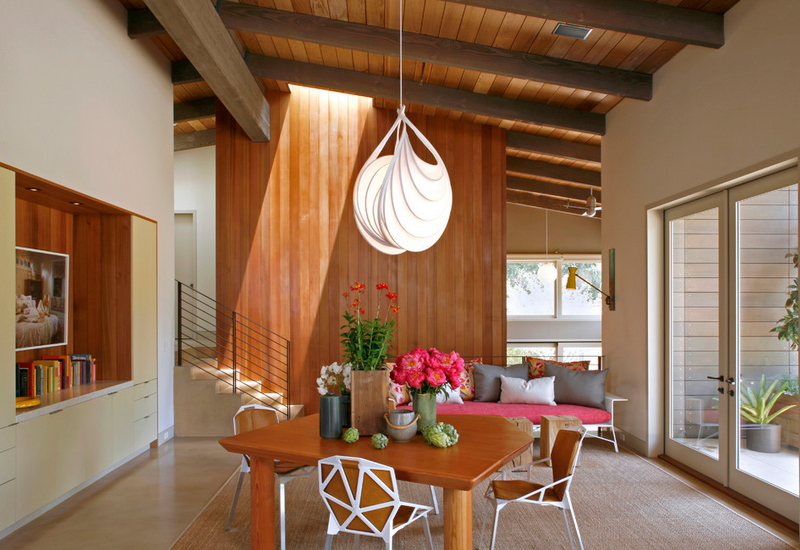
Mid-century modern interiors were not all neutral. While the backdrop was often calm, the style embraced pops of colour in shades drawn from nature: burnt orange, deep clay red, aquamarine, muted yellow, and forest green. These tones feel warm and grounded rather than jarring.
The approach to colour that works best is a neutral base with deliberate colour moments. A terracotta armchair, a deep teal cushion, or a mustard yellow throw can be enough to shift a room into mid-century territory without overwhelming the space. Dulux has a range of heritage-influenced tones that translate well into this palette if you are considering a feature wall or painted cabinetry.
Mid-century modern embraced a certain playfulness in its accessories that is easy to overlook. Sculptural ceramics, Murano glass, atom-inspired clocks, and graphic art prints all fit the era. This is a style that rewards a sense of humour alongside its design principles.
Keep accessories edited rather than abundant. Choose a few pieces with strong shapes or interesting colours and give them room to breathe. A single sculptural vase on a sideboard reads far better than a shelf crowded with competing objects.
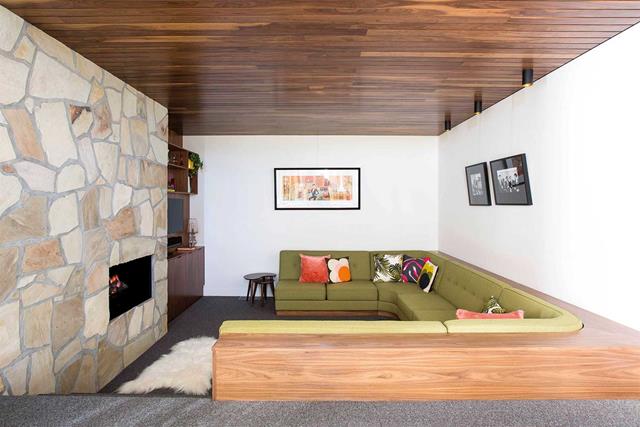
The mid-century bathroom was far more colourful than the all-white versions we tend to default to today. Coloured tiles, bold tapware, and patterned towels all reflect the era's willingness to have fun with spaces that often get forgotten. Beaumont Tiles carries a range of coloured and patterned tiles that work well in a mid-century inspired bathroom, from encaustic patterns to solid colour formats in period-appropriate tones.
If a coloured tile feels like too much commitment, try coloured grout in a contrasting tone, or introduce the colour through accessories and textiles instead.
When it comes to textiles, mid-century modern leans into pattern and warmth. Tropical florals, gingham, and wool bouclé were all popular in the era and translate well into a contemporary setting. The key is to keep the colour palette cohesive even when the patterns vary.
If bold pattern feels like too much, a simpler version of the style works just as well. Combine timber furniture with leather upholstery, soft greens, warm tans, and brass accents for a more understated mid-century look that feels refined rather than retro.
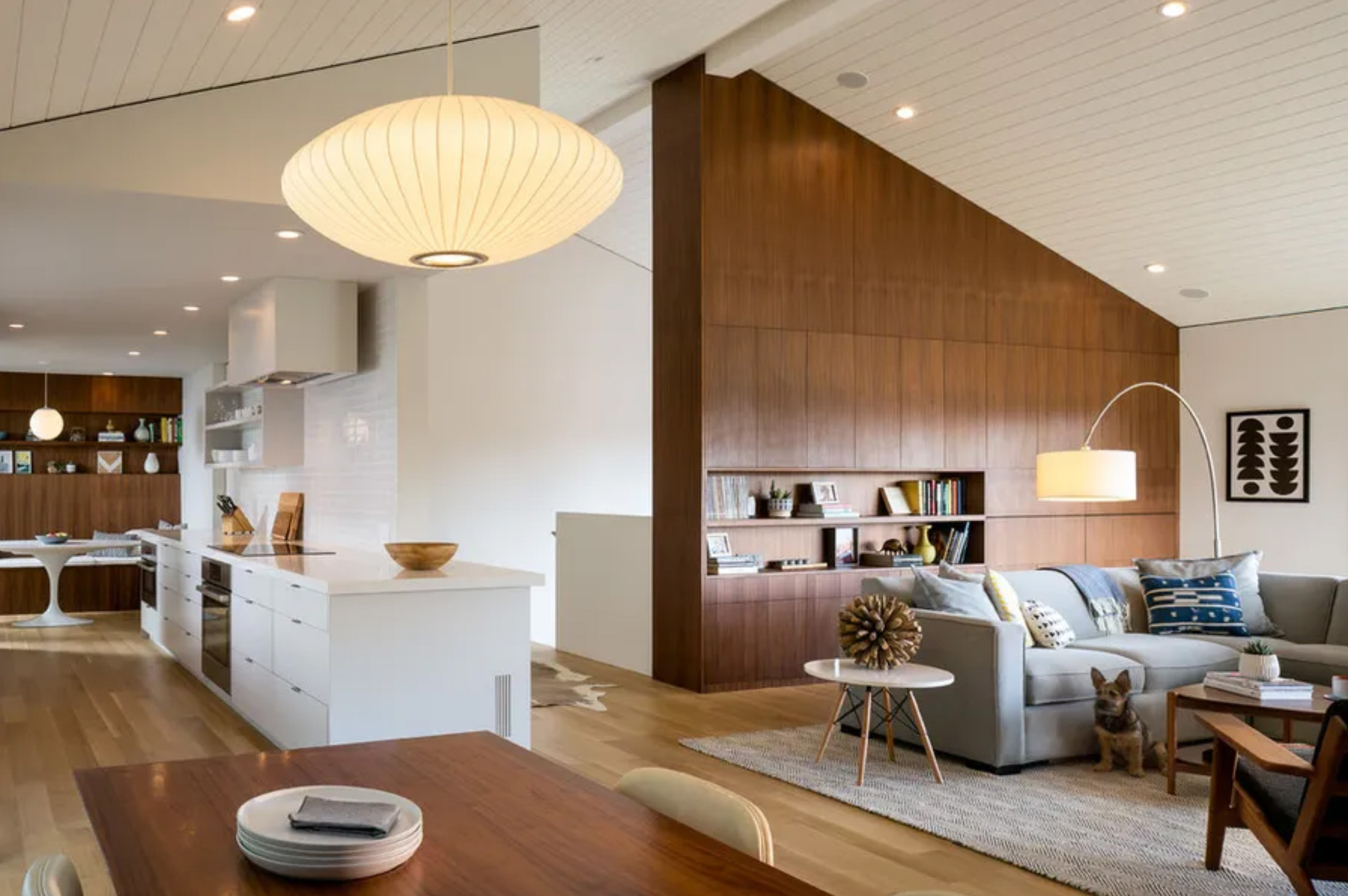
Mid-century modern architecture was built around the relationship between interior and exterior, and the interior design reflects that. Indoor plants are a natural fit for the style. Large-leafed varieties like fiddle-leaf figs, palms, and rubber plants suit the scale and organic spirit of mid-century interiors. Even a grouping of smaller plants in simple ceramic pots adds the right kind of warmth.
Bunnings is a practical starting point for indoor plant varieties that are well suited to Australian conditions and easy to maintain indoors.
Windows in mid-century modern homes were celebrated rather than covered. The goal was to emphasise the view and maintain the connection between inside and outside. Keep window treatments light and unfussy: breezy sheers that filter light without blocking it, or simple roller blinds that disappear when not in use. Heavy drapes work against the style.

Mid-century modern furniture was designed to be functional without being fussy. Sleek lines, tapered legs, and a focus on purpose over decoration define the pieces that have endured. Iconic designs from the era, including the Eames Lounge Chair, the Saarinen Tulip Table, and the Noguchi Coffee Table, remain in production today and are worth the investment if you want genuine statement pieces that anchor a room.
Contemporary versions inspired by these classics are widely available and can achieve a similar effect at a more accessible price point.
Lighting in mid-century modern interiors is sculptural and deliberate. Fixtures are not just light sources but decorative objects in their own right. Sputnik chandeliers, globe pendants, and arc floor lamps all reflect the era's fascination with futurism and space-age design.
A single statement pendant or an arc floor lamp can shift the whole character of a room. Look for fittings in brass, black, or warm metallic finishes with interesting geometric or organic forms. This is one area where spending a little more makes a visible difference to the finished result.
Finally, do not underestimate the contribution of art and greenery to a mid-century interior. Graphic prints, abstract shapes, and bold typography all suit the style. The Print Emporium carries a range of art prints that work well within a mid-century palette if you are looking for something ready to frame and hang.
Pair a well-chosen print with a healthy indoor plant and some considered accessories, and the room will feel like it has been styled with real intention.
.png)
Mid-century modern is not about recreating the past. It is about applying a set of principles, warmth, simplicity, natural materials, personality, and a connection to the outdoors, that make any home feel more considered and more enjoyable to live in.
If you would like help translating this style into your own space, get in touch. We would love to help you find the version of mid-century modern that works for your home.


